

Large commercial and infrastructure projects such as airports, shopping malls, hospitals, railway stations, warehouses and industrial facilities place demanding performance requirements on tiled surfaces. High footfall, equipment movement, vibration, moisture, temperature variations and frequent cleaning can place continuous stress on tile installations.
Under such conditions, conventional site-mixed sand-cement fixing methods may not always provide the consistency and performance required for modern tile and stone installations. Selecting an appropriate high-performance commercial tile adhesive can help provide reliable bonding, flexibility and installation consistency for demanding applications.
Mitigating Debonding Risks with Heavy Duty Tile Adhesive
High-traffic commercial areas expose tiled surfaces to repeated mechanical stresses from pedestrian movement, trolleys, equipment and other operational loads. Performance requirements become even more demanding when large-format or low-porosity tiles are used.
A suitably specified heavy duty tile adhesive provides an effective alternative to conventional site-mixed sand-cement mortar. Factory-controlled formulations containing cement, selected aggregates and performance-enhancing polymers can provide more consistent bonding characteristics and improved adhesion.
Polymer-modified formulations can also provide greater flexibility, depending on the product classification, helping the tile installation accommodate stresses arising from temperature changes, vibration and minor substrate movement. Correct product selection is therefore particularly important in demanding commercial environments.
Identifying High-Stress Commercial Zones
Not every tiled surface encounters the same conditions. Areas that may require higher-performance tile adhesive systems include:
1. Airport terminals and passenger corridors
2. Shopping mall entrances and circulation areas
3. Railway and metro stations
4. Industrial floors
5. Warehouses and logistics facilities
6. Commercial kitchens and service areas
7. Hospital corridors
8. Large retail spaces
9. Outdoor tile and suitable natural-stone installations
These locations can combine high footfall with equipment movement, frequent cleaning, moisture exposure and temperature variations. The adhesive should therefore be selected according to the tile or stone type, substrate, location and expected service conditions.
Reliable Bonding with High Strength Tile Adhesive
Modern commercial projects increasingly use vitrified and porcelain tiles as well as large-format tiles and slabs. Their relatively low water absorption means that traditional site-mixed mortar may not provide the same level of reliable adhesion as a properly specified adhesive system.
A high strength tile adhesive formulated for these applications can provide improved adhesion between the tile and prepared substrate. Polymer-modified cementitious adhesives are available in different performance classifications to suit specific project requirements.
Flexibility or deformability can also become important where tile installations are exposed to thermal changes, vibration or limited substrate movement. However, the adhesive must always be selected according to the tile format, substrate and application conditions rather than bonding strength alone.
Slip Resistance, Open Time and Deformability
Large commercial projects require efficient and accurate tile installation. Depending on the application, characteristics such as reduced slip and extended open time can make installation easier and more controlled.
Under EN 12004 classification, cementitious tile adhesives are classified according to adhesion performance, with additional designations indicating specific characteristics. For example, T indicates reduced slip, E indicates extended open time, while S1 and S2 indicate levels of deformability.
These characteristics can be particularly relevant for large-format tiles, vertical applications and demanding commercial or external installations. The appropriate classification should always be selected according to the project’s technical requirements and the manufacturer’s recommendations.

Reducing Hollow Pockets and Debonding Risks
Adhesive selection alone cannot ensure a successful installation. Insufficient adhesive coverage can create voids beneath tiles, increasing vulnerability to impact, moisture ingress and concentrated loads.
Correct substrate preparation, appropriate trowel selection, adequate adhesive coverage and proper installation techniques are therefore critical. Large-format tiles may also require specific application methods, including applying adhesive to both the substrate and tile back where recommended, to achieve the required coverage.
Movement and expansion joints must also be properly designed and maintained. Even a high-performance adhesive cannot compensate for an unsuitable substrate, insufficient coverage or incorrect installation practices.
Consistent Quality with Bulk Tile Adhesive Procurement
For large, multi-phase infrastructure developments, bulk tile adhesive procurement can help project teams maintain consistency across different floors, buildings and construction phases.
Purchasing a specified product from a reliable manufacturer can support consistency in formulation, packaging, batch quality and expected performance. Standardisation can also simplify site operations by allowing contractors to follow consistent mixing, application and quality-control procedures across the project.
It can additionally support inventory planning and reduce the need to source different materials repeatedly during different construction phases.
Faster and More Controlled Execution with Factory-Manufactured Tile Adhesive
A Factory-manufactured tile adhesive offers an important advantage over conventional site-mixed sand-cement mortar: controlled formulation.
Instead of manually proportioning cement and sand at the project site, factory-manufactured dry-mix adhesives are produced using defined formulations and quality-control processes. On site, the product is typically mixed with the specified quantity of water according to the manufacturer’s instructions.
This reduces variables associated with manual batching and sand quality and can help improve installation consistency. It also eliminates activities such as on-site sand screening and repeated preparation of conventional sand-cement mortar, contributing to cleaner and more organised site operations.
Tile adhesives can also reduce dependence on water-curing practices associated with conventional cement-mortar fixing methods. However, contractors must still follow the adhesive manufacturer’s specified setting, grouting, traffic and service timelines.
Selecting the Right Adhesive for the Application
No single adhesive is suitable for every commercial installation. Selection should consider tile type and size, substrate, indoor or outdoor exposure, moisture, temperature variation, expected traffic, application orientation and required working time.
For large-format, low-porosity or demanding commercial applications, project teams should evaluate relevant product classifications and technical data rather than selecting an adhesive based only on general descriptions such as “high strength.”
Correct specification should always be supported by the manufacturer’s technical data sheet and installation recommendations.
Manufacturing Capabilities for Evolving Industry Requirements
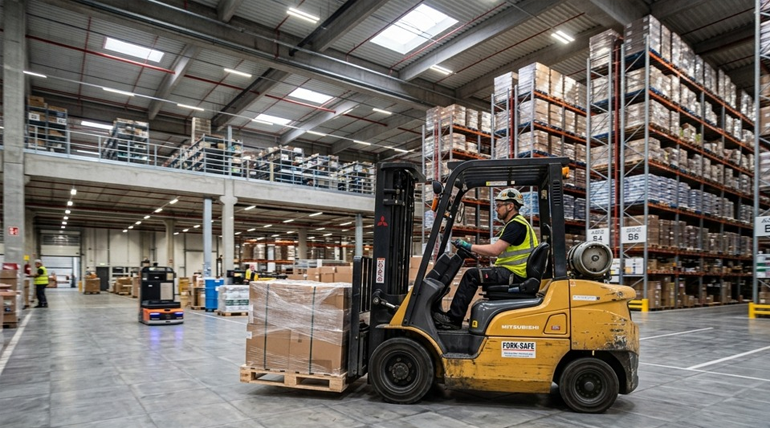
DryChem supports the evolving requirements of the building and construction materials industry with established manufacturing capabilities across a range of construction material solutions. The company also offers toll manufacturing and contract manufacturing services, enabling businesses to leverage its manufacturing infrastructure, technical expertise and quality-controlled production processes.
This combination of manufacturing capability, technical know-how and scalable supply enables DryChem to support diverse customer and project requirements across domestic and international markets. Such manufacturing partnerships can also help businesses access established production capabilities while maintaining consistency, quality and operational efficiency as requirements scale.
Final Takeaway
High-traffic infrastructure projects require tile installation systems designed around actual service conditions. A properly specified commercial tile adhesive can provide improved bonding performance and greater installation consistency compared with traditional site-mixed fixing methods.
The performance of the overall installation, however, depends on more than adhesive strength alone. Tile and substrate compatibility, correct product classification, surface preparation, adhesive coverage, movement joints and professional application all contribute to long-term performance.
By combining the right adhesive with appropriate installation practices and consistent factory-manufactured formulations, infrastructure developers and contractors can achieve durable tile installations while supporting efficient and controlled project execution.