
The construction industry is steadily adopting materials that can simplify building processes while improving speed, performance and sustainability. Gypsum boards, also known as drywall or plasterboards, have emerged as a preferred solution for modern interior applications. Their lightweight construction, versatility, ease of installation and smooth finish make them suitable for residential, commercial and institutional projects.
The rising use of gypsum boards is also creating opportunities for businesses looking to enter or expand within the gypsum board market. However, establishing a dedicated manufacturing facility requires significant investment in land, machinery, technology, skilled professionals, quality-control systems and raw-material management. It may also take considerable time before commercial production can begin.
Toll manufacturing provides businesses with a more practical route to market. By working with an established manufacturer, companies can introduce or expand their gypsum board portfolio without immediately investing in their own production infrastructure. This allows them to focus on branding, sales, marketing and distribution while leveraging existing manufacturing expertise and capabilities.
What Is a Gypsum Board?
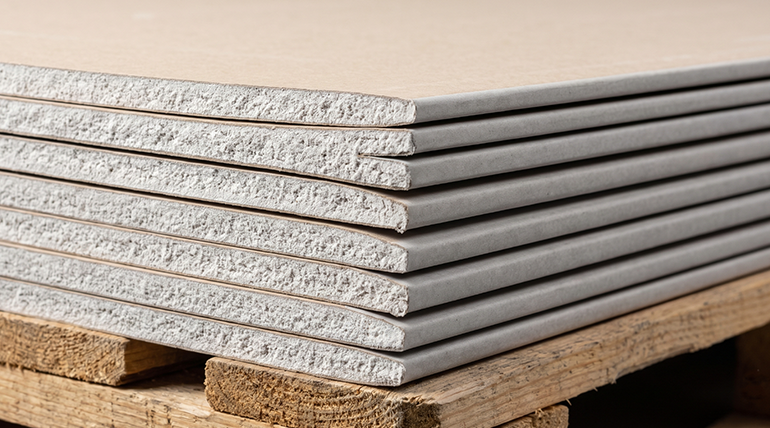
A gypsum board is a simple yet effective construction material primarily used for interior walls, partitions and ceilings. Its core is made from gypsum, a naturally occurring mineral scientifically known as calcium sulphate dihydrate. This gypsum core is generally placed between durable layers of paper to create a smooth, stable and easy-to-handle board.
Gypsum boards are manufactured in different sizes, thicknesses and specifications to meet the requirements of various applications. Depending on the product type and system design, they can be used for standard interiors, moisture-prone areas, applications requiring better fire resistance and spaces where enhanced sound control is necessary.
Their consistent dimensions and smooth surface make them convenient for creating uniform walls and ceilings. Once properly installed and finished, the boards can be decorated with paint, wallpaper or other suitable surface treatments.
Easy and Efficient Installation
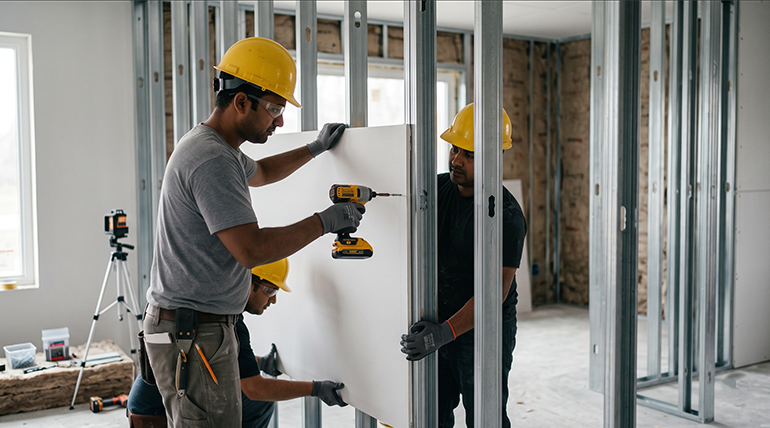
One of the most important benefits of gypsum board installation is its speed and convenience. Gypsum boards are lightweight and can be easily cut, shaped and fitted according to the dimensions of a room or building.
They can be attached using screws, nails or suitable adhesives to wooden or metal framing systems and, in some applications, to existing surfaces. This reduces dependence on lengthy wet construction processes and can help shorten project timelines.
Traditional masonry walls may require brickwork, plastering, curing and additional finishing before the surface is ready for decoration. Gypsum board systems can reduce several of these stages. As a result, they generate less on-site mess, require less water and allow different construction activities to progress more efficiently.
The lightweight nature of gypsum boards also makes storage, transportation and handling easier. However, proper installation practices, appropriate accessories and suitable joint-treatment systems remain essential for achieving a smooth and durable finish.
Fire-Resistant Properties
Gypsum has a non-combustible core that acts as a natural barrier against fire. It contains chemically combined water within its structure. When exposed to high temperatures, this water is gradually released in the form of vapour.
This process helps slow the transfer of heat and can delay the spread of fire. Therefore, fire-resistant gypsum boards are frequently used as part of appropriately designed wall, partition and ceiling systems.
The actual level of fire resistance depends on several factors, including the board type, number of layers, board thickness, framing system, joint treatment and overall installation design. Gypsum boards should therefore be selected and installed according to the specific fire-safety requirements of the project.
Better Sound Control
Noise control has become an important consideration in modern buildings, particularly in offices, hospitals, hotels, educational institutions, apartments and entertainment spaces. The dense core of gypsum boards can help reduce the transmission of sound between rooms and floors.
When used as part of a properly designed partition or ceiling system, acoustic gypsum boards can contribute to quieter and more comfortable indoor environments. Multiple board layers, insulation materials and correctly designed framing systems can further improve sound-control performance.
Effective sound insulation supports privacy, concentration and occupant comfort. However, sound performance depends on the complete system rather than the gypsum board alone. Openings, joints, doors, service penetrations and installation quality must also be carefully managed.
Versatile Interior Applications
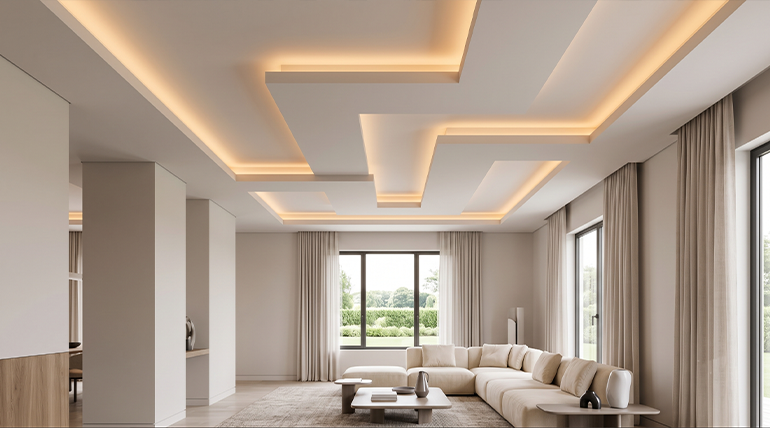
Versatility is one of the major reasons behind the increasing use of gypsum boards. They can be used in a wide range of interior applications across different types of buildings.
Common applications include:
● Interior wall lining
● Drywall partition systems
● False ceiling applications
● Decorative ceiling features
● Bulkheads and design elements
● Concealing electrical and plumbing services
● Creating cabins and internal divisions
● Renovation and remodelling projects
Gypsum boards provide architects, interior designers and contractors with flexibility when planning functional layouts. They can be used to create straight walls, suspended ceilings and customised design features. Their adaptability makes them suitable for both simple interiors and more detailed architectural applications.
The smooth surface of the board also provides a suitable base for different decorative finishes, helping create clean and aesthetically appealing spaces.
Strength and Durability
Gypsum boards are designed to provide dependable performance in interior environments when the appropriate board type is selected and installed correctly. They can withstand regular use across residential and commercial settings and create stable surfaces for further decoration.
Different product variants may offer additional properties for specific project requirements, including improved resistance to moisture, mold or impact. Gypsum itself is not a food source for termites, although the complete building system and surrounding materials should still be protected through suitable construction practices.
Correct framing, fastening, joint treatment and finishing are important for preventing surface irregularities and reducing the possibility of cracks. Gypsum boards should also be stored in dry conditions and protected from prolonged or excessive water exposure unless a suitable moisture-resistant variant has been specified.
Contribution to Sustainable Construction
Sustainability is becoming increasingly important across the building-materials industry. Gypsum is a naturally occurring mineral, and gypsum board waste can be recycled and reused in the manufacturing process where suitable recovery facilities are available.
The lightweight nature of gypsum boards can help reduce the overall load on a building compared with heavier conventional partition materials. Lower weight may also support easier transportation and material handling.
In addition, dry construction technology uses less water at the project site than traditional wet construction methods. Faster installation can reduce the duration of certain construction activities and support better utilisation of labour and resources.
Sustainable performance, however, depends on responsible sourcing, efficient manufacturing, waste management and proper product use throughout the building’s lifecycle.
Toll Manufacturing: Supporting Faster Business Growth
For companies planning to enter the building-materials sector or expand an existing product portfolio, developing an independent gypsum board manufacturing unit can require considerable time and capital. Along with production machinery, businesses must build technical capabilities, establish quality-control processes, manage raw materials and develop an efficient manufacturing workforce.
Drychem’s toll manufacturing services for gypsum boards enable businesses to leverage established manufacturing capabilities while concentrating on their core commercial strengths. Products can be manufactured according to mutually agreed specifications, quality parameters and volume requirements.
Toll manufacturing can support business growth by helping companies:
● Reduce the need for substantial upfront capital investment
● Shorten the time required to introduce products to the market
● Expand their portfolio without establishing a new manufacturing facility
● Access production expertise and established quality-control systems
● Adjust manufacturing volumes according to market demand
● Focus resources on branding, sales, marketing and distribution
● Explore new regions or customer segments with lower operational risk
● Improve supply flexibility during periods of rising demand
By separating manufacturing from market development, businesses can use their financial and managerial resources more strategically. They can concentrate on building customer relationships, strengthening distribution networks and increasing brand visibility while the manufacturing partner manages production activities.
Backed by its manufacturing expertise, technical knowledge and quality-focused processes, Drychem supports business partners seeking dependable and scalable gypsum board manufacturing solutions.
Conclusion
Gypsum boards may not always be the most visible element of a building, but they play an important role in shaping its walls, partitions and ceilings. Their easy installation, fire-resistant characteristics, sound-control capabilities, versatility and smooth finish make them a valuable solution for modern interior construction.
At the same time, toll manufacturing enables businesses to participate in the expanding gypsum board market without immediately investing in their own manufacturing infrastructure. By combining reliable production capabilities with a partner’s branding, distribution and market reach, Drychem creates a practical platform for portfolio expansion, faster market entry and sustainable business growth.